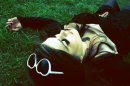
HARKING back to a time when furniture was built to last and clothes were cut to fit, vintage styling puts the emphasis back on individuality. Foraging for vintage gems is no mean feat for even the keenest of eyes, but do not despair: it’s time for the biannual Helsinki Vintage fair!
“Vintage is kind of a cultural umbrella that holds underneath it different things: fashion, music, art, burlesque and so forth. The aim is an event that would gather all the best vintage sellers and a wide range of goodies from past decades, together with an interesting side programme and a relaxed atmosphere to hang out,” explains organiser Lotta Nyqvist. “There was a lack of vintage fairs in Finland and I wanted to create not only a vintage sales event, but a celebration of vintage culture.”
Individuality has long been synonymous with style and so the appeal of vintage style is hardly surprising. “It’s the visual and historical aspects, the uniqueness and the quality of materials used – the feeling that there’s a story behind these items.” describes Nyqvist. And the event is not purely for aficionados, Nyqvist explains: “It’s a very good starting point for people who are curious about the scene, since it offers such a wide and comprehensive selection of vintage culture in the same place at the same time.”
Sun 27 September
Helsinki Vintage
Kaapelitehdas, 11:00-18:00
Tallberginkatu 1
Tickets €9
Saturday, August 29, 2009
V is for Vintage

Vampires Are Forever
Myths and legends have transcended cultures and eras but none have done so quite like vampires.
IMAGINE if popular culture were the politics of the 21st century. There would be no question as to who would be leading the polls. Twilight became the highest grossing vampire film of all time. True Blood is one of HBO’s most watched series since The Soprano’s and even a new Buffy The Vampire Slayer film has been announced. Vampires are biting back.
This renaissance is hardly surprising. The allure of vampires has been apparent since the 19th century and, despite what you might suspect, the longevity of their appeal is not a result of the vampires’ glamouring skills but most likely our own conflicting desire for, and fear of, immortality.
Vampires are apt vehicles for our cultural anxieties, thus serving to represent the collective unconsciousness of society. As Ron Moger, a vampire enthusiast explains: “The Vampire as a cultural figure has managed to remain relevant largely because its form has changed through the ages to adapt for the people who were imagining it.”
Being culturally adaptive allows the traditional vampire myth to be continually reworked. For instance, the church seems to pose no threat to modern vampires, which is perhaps a nod towards society today being more secular. This ability to evolve allows the vampire myth to further become an inextricable part of cultures worldwide.
Certain themes remain constant within vampire stories, and the essential differences in the representation of vampires lay between folklore and literature. For example: Folklore vampires are not sophisticated or refined, nor are they in the slightest bit scrupulous. They are gruesome beasts rather than humans with fangs.
Moger believes that the current “domestication” of vampires has contributed to the profusion of vampires in popular culture: “Whereas I might have found other horror characters unfamiliar as a child (who can relate to the creatures in Alien?), there was always something about the vampire that struck a chord.”
Adapting their barbaric nature to fit the values of modern society, transforming from terrifying outlaws into embodiments of lust, vampires appeal to basic human instincts and desires. This has led to a shift in focus to their social relationships with humans.
Love at first bite
Modern writers tend to pick and choose their vampires’ strengths and weaknesses, customising the extent to which disbelief can be suspended and helping to maintain the enduring fascination. This flexibility has provided opportunities for the myth to exemplify its thematic diversity by successfully transcending a range of genres.
The fusion of vampires and romance is a particularly popular union. The Twilight characters, Edward and Bella, have captured the hearts of today’s teens just as Buffy and Angel did in the late 1990s. It is the emotional participation in their entanglement that ultimately sustains the interest of the readers. The fact that Edward is a vampire seems almost incidental.
Anne Rice and her Vampire Chronicles novels that spanned from 1976 to 2003 undoubtedly played a key role in the revitalisation of the genre. Twisting the established definitions of vampire lore and mirroring social ostracism in the modern world, the convergence of “old” and “new” world vampires in novels such as Interview with a Vampire has strongly influenced modern gothic identity and neo-gothic subculture. Gone is the pervasive perception of a cape-clad attacker who sleeps in a coffin and has an aversion to garlic.
“Nowadays the vampire takes on many forms, though mainly that of a carefree, all powerful individual with no responsibilities, the ability to get anything he wants and with no fear of death – powers which I’m sure that one or two people would love to be able to have themselves!” says Moger.
Goth ‘N’ Roll
Modern vampires are idols. In The Lost Boys, the 1987 cult film, the vampires don Ray Bans and drive fast cars. Vampire Bill Compton in True Blood even owns a Nintendo Wii!
Goth Tio Knight explains: “Vampires are always associated with rebellious, leather-wearing baddies who love rock n roll! For me personally, the allure can be defined by The Lost Boys slogan: ‘Sleep all day, party all night, never grow old and never die’. They always seem to embrace that whole ethos, regardless of where they stand in history or pop culture – from the Anne Rice novels or modern movies like Twilight, but it is especially true in the character of Spike from Buffy!”
Defining humans and vampires as binary pairs such as good/bad or dark/light only serves to reinforce the vampire’s role in representing the darker side of humanity – an identification that evokes empathy towards the vampires. They are not just creatures of the night; they are victims of the night. It is a powerful social and political allegory which makes their alienation and their sophisticated loneliness an attractive and appealing concept for teens.
“What teenager can’t understand a character who is isolated, rejected, apparently hated by the masses? The Vampire sleeps all day, does what he wants at night, lives to his own schedule, gets any woman he wants and, let’s face it, he nearly always lives in the biggest, baddest, house in town. Sounds to me like the perfect life!” explains Moger.
A stake in the business
It would be difficult to find a commercial enterprise that isn’t taking advantage of the vampire cash cow. American clothing brand Wildfox Couture is introducing their latest campaign with the biting statement “Boys come and go, but vampires are forever,” and selling a range of T-shirts baring slogans such as “Fangs are Fantastic” and “My boyfriend is a vampire”.
Charlotte Cheyney, a buyer’s assistant for the online clothing retailer ASOS.com, comments: “Wildfox is a bestseller for ASOS. Styles sell out within days and we expect the vampire-inspired tee to be no exception. After all, who wouldn’t want to imagine having the god-like Edward Cullen as a boyfriend!”
As our hunger for vampires shows no sign of being satisfied, more reinventions are inevitable. These range from Facebook applications such as Vampire Wars to a blatant exploitation of human intrigue and curiosity in the title of the British film Lesbian Vampire Killers (one guess as to what that film is about!).
Swedish novelist John Ajvide Lindqvist’s Let the Right One In (Låt den rätte komma in) and its subsequent 2008 film adaptation provide a darker alternative to the saccharine romance of the Twilight franchise. Profoundly exploring the basic nature of good and evil, the refreshing reworking of the classic vampire story received such international acclaim that the rights for an English-language remake were sold even before its theatrical release.
It is impossible to quench the unquenchable and for as long as danger, darkness and the unknown continue to fascinate, our thirst for bloodsuckers will undoubtedly last, perhaps like vampires themselves, for eternity.
Centuries of sucking
The origin of the vampire myth is a huge subject in itself, and superstitions about bloodsuckers and the myths that pertain to the vampire legend have been present in most world cultures for millennia: From bats and leeches to the South American Chupacabra (“goat sucker”) and the Ghanaian Asasabonsam-monster with iron teeth.
Many of the folktales originated in medieval times, based on contemporary spiritual beliefs and views on life after death. Theories such as miasma – the notion that diseases are caused by a noxious form of “bad air” – were little understood in the time of great pandemics like the bubonic plague. The dead were the perfect scapegoat for the continual inexplicable “attacks” on the population.
Historical events also played a key role in shaping folklore. In the 15th century, Vlad the Impaler of Wallachia became famous for his cruelty as a ruler. Hungarian Countess Elisabeth Bathory, a 16th century serial killer, allegedly bathed in the blood of her victims. In the 17th century Jure Grando, the “Vampire from Kringa,” terrorised the Croatian town’s inhabitants.
An influx of vampire superstition entered Western Europe during the 18th century as a result of the mass hysteria following an epidemic of vampire sightings in Eastern Europe. But it was in 1897 that the undying popularity of vampire fiction really began to take off with the publication of Bram Stoker’s novel Dracula, inspired by the story of Vlad the Impaler.
The abundance of vampires in the realm of fiction continued, from Edgar Allen Poe to Tolstoy. The original folklore image was already showing signs of transforming, but Stoker, progenitor of modern vampire stories’ Dracula character, really created the archetypical vampire in fiction. Introducing many of the common conventions including garlic, stakes and Christian symbols as weapons, it has since become the subject of untold imitations.
Thursday, July 9, 2009
Shape Shifting
A new dawn is breaking for club culture, beckoning a future with no clear cut boundaries. It’s unpredictable and full of surprises.
It was back in 1964 when Bob Dylan first sang The times they are a-Changin'. Forty-five years on, it has never been more appropriate. As people become more aware of their lifestyle and their choices, there has been a perceptible shift in Helsinki’s nightlife. State of the art equipment, although still important, is no longer the main focus. The emphasis is shifting back to the guest’ experience and the key is to get more for less without a compromising on quality.
In cosmopolitan cities like Helsinki, both integration and the preservation of cultural traditions is important. It is therefore inevitable that cultural aspects become fused; elements of different music genres blend together and music is no longer easy to define.
Transfer this to the club scene and it encourages a community feeling in an urban environment. An attempt to create an atmosphere and experience without accompanying social or cultural complications. It is an undisputed fact that Helsinki holds considerable power where groundbreaking and innovative art forms are concerned but as this broader approach to music emerges, to what extent does Helsinki’s nightlife represent the changing face of club culture?
Children of the revolution
Acclaimed hard dance DJ, Proteus, who is a key player in revolutionising Helsinki’s nightlife explains: “Beside rock culture, Helsinki nightlife could be much better.”
“Helsinki has an amazing amount of bars and nice venues but still the club culture could be more rich and alive. The club culture in Helsinki is very much based on chill-out and house music, but Helsinki does have many rock bars with good live bands playing from Mondays to Sundays and that’s the best thing in Helsinki”
According to Proteus, it seems Helsinki still has developmental potential, so what’s next?
“I would like to see Helsinki to be someday like Berlin or London; very rich and live, lots of interesting things going on. I think there are too many commercial discos in Helsinki with a very commercial and narrow-minded repertoire… but still comparing to other cities, Helsinki definitely has the best to offer in Finland.”
Express yourself!
That clubbing was becoming too commercial is a widely held belief, and underground artists have been striving to stem the flow of constantly reissued and remixed music and provide something fresh, something innovative.
Promoter, Lili Srdic believes that a key factor for ensuring the successful evolution of club culture is communication: “[it’s] the exchange of opinions and ideas between regular club goers, including the performers and organisers themselves. The intricate fabric of this city and its potentially stimulating and diverse environments are ideal for expression and discussion, and for raising awareness.”
Is this an attempt to make hedonism give way to altruism?
Just as it is virtually impossible to confine a person to one genre, one artist or one song, club cultures are starting to reflect this. Revellers are no longer content with just a beer in a bar and juxtaposition is crucial in embracing the diversity of an audience; a variety of genres, against a variety of acts, versatile spaces and exotic entertainment.
Soundtrack to your life
Effectively, DJ’s create a soundtrack for your night out, but in fact they are willing to do much more. As the search for a less complicated life continues, it is only natural that a less complicated soundtrack to compliment it is sought. “I’m trying to bring more underground culture and different interesting events to Helsinki’s night life. I try to offer people more things to experience and hear,” says Proteus about his aims for the nightlife of Helsinki.
Tired of fickle fads, there is a growing demand among the more self-assertive new generation for more than “just a night out.” The modern short attention span seems to requires extra stimuli. People want more! Something that is perhaps a reflection of this multimedia age.
Proteus currently organises three events in Helsinki in an attempt to satisfy this. All showcase hot new acts and focus on diversity. For example: Torture Torstai at Kuudes Linja in Helsinki’s Kallio district, is a monthly club night that Proteus describes as one that “offers more special and unusual things to people; from fetish themes to punk nights and from burlesque shows to black metal.”
Melting pot
The combination of a hard house DJ with theatrical entertainment from acts such as the Burlesque dancers of the Burlesque Polaire group could be said to have evolved from the multiple clubbing events of the nineties. Sub-cultures have long co-existed but now there’s a more united front; the idea now is not to separate each individual elements but to combine them.
The Graveyard Party is another example of a symphony for the senses. A festival of sorts that takes place during Helsinki’s darker months, it encourages people to step outside their comfort zone. “A melting pot of all dark music cultures, from Goth bands to heavy industrial bands,” describes Proteus.
The analogy of a melting pot is a recurring theme with regards to the future of club culture. Each “ingredient” retains its own flavour, while playing an equal role in the flavour of the overall product. Music has long played an important part in cultural fusion and incorporated with multimedia events it helps to capture the essence of diversity.
The audiences’ tolerance, participation and acceptance of diversity in a cosmopolitan setting reflects an acknowledgement of the otherness of the future. In the case of club culture, the myriad of combinations that the cultural fusions provide, guarantee an interesting, intriguing and most likely, victorious future.
Daisey Cheyney - HT